Gear ratios and differentials made simple
Gearing decides how your engine's power reaches the wheels, and the differential decides how it is shared. This guide explains both in a friendly, practical way.
What gear ratios actually do
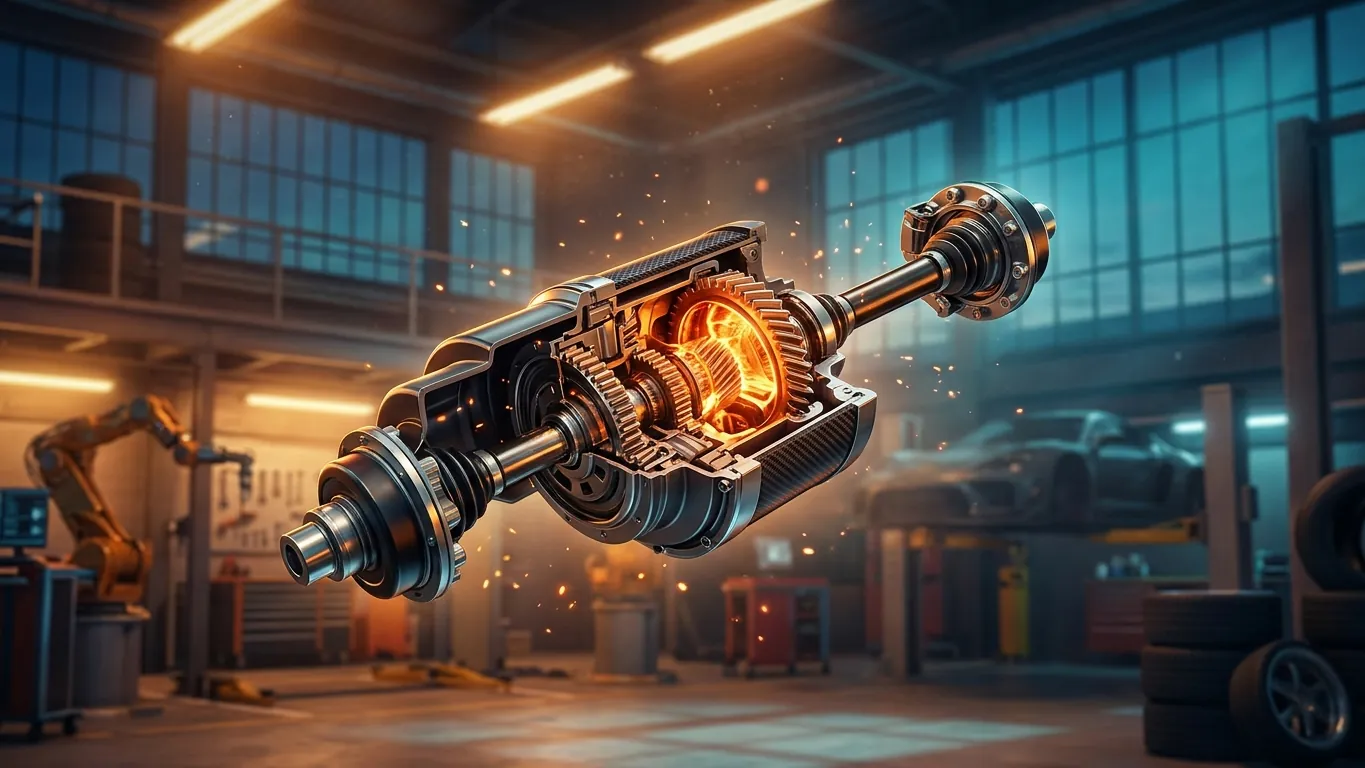
An engine produces its best power within a certain range of engine speed. Gears let the car stay in that useful range at different road speeds. A shorter gear multiplies torque and helps the car accelerate quickly, but it runs out of revs sooner. A taller gear allows higher top speed but accelerates more gently.
In games that allow gear tuning, you can usually adjust each individual gear and the final drive. The final drive affects all gears together. Shortening it makes the whole gearbox feel more eager. Lengthening it makes every gear stretch further.

Matching gearing to the track
A tight, twisty track rewards strong acceleration out of slow corners, so slightly shorter gearing can help. A fast track with long straights may benefit from taller gearing so you do not hit the rev limiter before the braking zone.
A practical check is to look at the longest straight. If you reach the rev limiter in top gear well before braking, your gearing may be too short. If you never reach top gear at all, it may be too tall. Small final drive adjustments are an easy way to find a comfortable middle ground.
The differential and why it exists
When a car turns, the outside wheels travel farther than the inside wheels. A differential allows the driven wheels to spin at different speeds so the car can corner smoothly. An open differential allows this freely, but it can send power to the wheel with the least grip, causing the inside wheel to spin when you accelerate out of a corner.
A limited-slip differential, often shortened to LSD, restricts how much the wheels can differ in speed. This helps put power down more evenly. Many simulators let you adjust how strongly it locks under acceleration and under deceleration.
Tuning differential lock with care
Acceleration lock affects corner exit. More lock helps both wheels push the car forward, but too much can make the car resist turning or push wide. In rear-wheel-drive cars, high acceleration lock can also cause the rear to step out suddenly under throttle.
Deceleration lock affects corner entry, when you lift off the throttle or brake. More lock can make the car more stable but may add understeer as you turn in. Less lock can help the car rotate but may feel nervous. Adjust in small steps and pay attention to how the car feels at entry and exit separately.
A step-by-step gearing check
Use this sequence to tune gearing and the differential without getting lost.
- 01
Set the final drive
Adjust it so you reach near the top of your final gear at the end of the longest straight.
- 02
Check gear spacing
Make sure each upshift drops the engine back into a strong part of its rev range.
- 03
Test corner exit
Accelerate out of slow corners and note any inside wheel spin or sudden slides.
- 04
Tweak the differential
Change acceleration or deceleration lock slightly, one at a time, and compare laps.
Related articles
 Controller or wheel: setup tips for comfortable driving
Practical tips for driving simulators on a controller or a wheel, from deadzones and sensitivity to seating position and comfortable force feedback.
Read more
 Why virtual garages make us love real cars more
An opinion piece on how car simulators and virtual tuning spark curiosity about real cars and engineering, and how to enjoy that interest responsibly.
Read more
 Arcade vs. simulation: finding your driving style
A friendly explainer on what separates arcade racers from driving simulators, from physics and assists to tuning depth, so you can pick your style.
Read more