Detailed tuning menus
Options for camber, toe, damping, and differential settings usually indicate a deeper physics model.
Driving games range from playful arcade racers to detailed simulators. Here is a clear look at what actually separates them and how to choose the style that suits you.

People often talk about arcade and simulation as if they were two separate boxes. In practice, driving games sit on a spectrum. At one end are games built for instant fun: wide grip, generous recovery from mistakes, and dramatic drifts that you can hold with a single button. At the other end are simulators that try to model how a real car behaves, from tire flex to the way fuel load changes balance.
Most popular titles land somewhere in the middle. They often call themselves sim-cade, offering believable car behavior with enough forgiveness to be enjoyable on a controller. Understanding where a game sits helps you set expectations. If a car feels twitchy, that might be intentional realism rather than a flaw in your driving.

The biggest difference between styles is the physics model. In a simulator, braking pushes the car's weight forward, giving the front tires more grip and the rear tires less. Accelerating does the opposite. Turning shifts weight to the outside wheels. These shifts are why a car might spin if you brake hard while turning.
Arcade games often soften or ignore these effects. You can brake mid-corner and the car simply slows down. Neither approach is wrong. Arcade physics let you focus on racing lines and speed, while simulation physics reward smoothness and patience. If you are moving from one to the other, expect a short adjustment period. Being gentle with inputs is the single most helpful habit when you step into a more realistic game.
Traction control, stability control, anti-lock brakes, braking lines, and automatic gears all exist to help you. Some players feel they should switch everything off immediately, but there is no rule that says so. Assists let you learn a track and a car without constant spins, which keeps the experience enjoyable.
A good approach is to remove one assist at a time once you feel comfortable. For example, you might switch from automatic to manual gears first, then lower traction control a step. Notice how the car responds. If driving stops being fun, put the assist back. Your enjoyment matters more than any label.
These clues can help you understand what kind of driving experience a game is aiming for.
Options for camber, toe, damping, and differential settings usually indicate a deeper physics model.
If tires need to warm up and lose grip over a long run, the game is modeling more realistic behavior.
Cars that react noticeably to braking and throttle mid-corner are simulating weight transfer.
Extensive force feedback settings often signal that the game was designed with simulation hardware in mind.
Think about how you like to play. If you have twenty minutes after work and want to unwind, an arcade or sim-cade game may be the perfect match. If you enjoy studying data, practicing a single corner until it feels perfect, and tuning between sessions, a simulator can be deeply rewarding.
Many players enjoy both. Arcade racers are great for relaxed fun with friends, while simulators offer a slower, more thoughtful kind of satisfaction. Whichever path you choose, the rest of the articles on this blog will help you get more from your virtual garage.
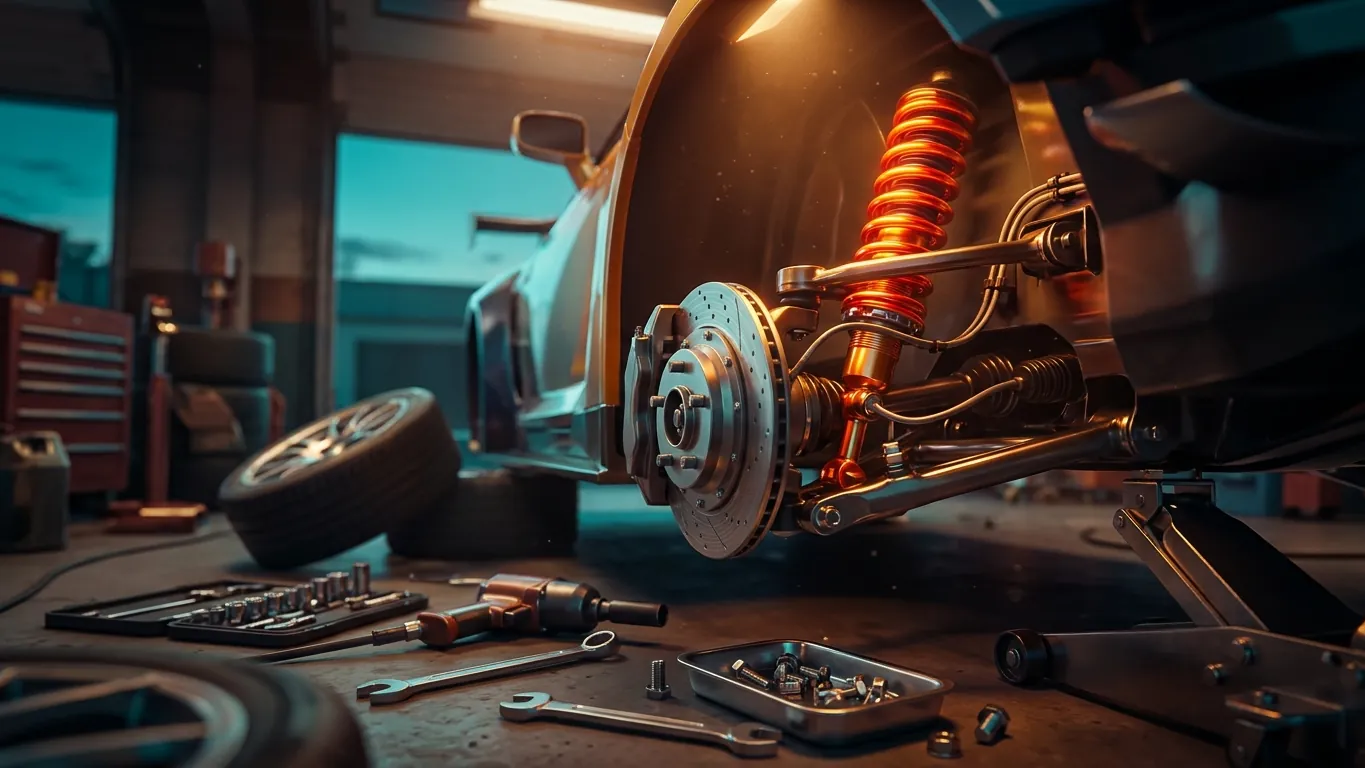 Suspension tuning basics for virtual drivers
Learn how springs, dampers, ride height, and anti-roll bars affect handling in driving games, with a simple routine for testing changes one at a time.
Read more
 Building your first virtual garage
Friendly tips for choosing your first cars in driving games, from drivetrain layouts to power levels, so your virtual garage helps you learn and grow.
Read more
 Tires, grip, and pressure explained
An approachable explainer on tire grip, temperature, and pressure in driving simulators, and how to read what your tires are telling you on track.
Read more